Always-On Is Slowing You Down: How Async-First Developer Communities Are Quietly Outshipping Real-Time Teams
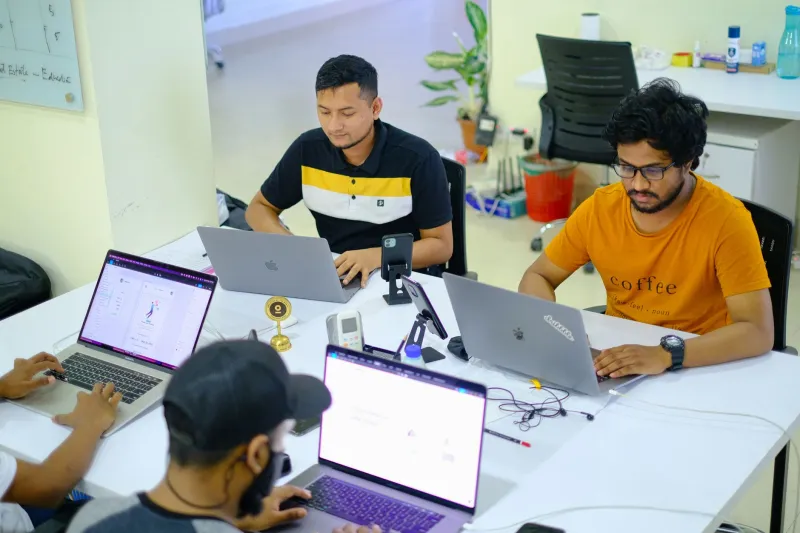
Somewhere between your third Zoom call of the morning and the Slack notification that interrupted your flow state for the fourth time before lunch, something went wrong. The tools we adopted to make remote work feel more human ended up making it feel more exhausting. And for distributed engineering teams — especially those collaborating across continents — the cost isn't just burnout. It's shipping velocity.
Here's the paradox no one in your productivity stack wants to admit: real-time collaboration tools, used without discipline, are making remote teams slower.
GDG communities that figured this out early — including GDG Chennai — aren't just talking about it at meetups. They're living proof that a different model works.
The Always-On Illusion
The pitch for synchronous tools is seductive. Everyone in the same virtual room. Decisions made fast. Momentum maintained. It feels like progress because there's noise and motion.
But here's what the data and lived experience of distributed developers keep surfacing: constant availability is not the same thing as constant productivity. When your calendar is a mosaic of 30-minute syncs and your Slack status is permanently set to "active," you're optimizing for the appearance of collaboration — not the output.
For teams with members in Chennai and counterparts in California, New York, or Austin, the synchronous model creates an even more specific problem: it forces one side to work at the edges of their biological clock just to maintain the illusion of a shared workday. The result is that both sides end up with less deep work time, more context-switching, and decisions that feel made but were never actually documented.
What GDG Chennai Figured Out
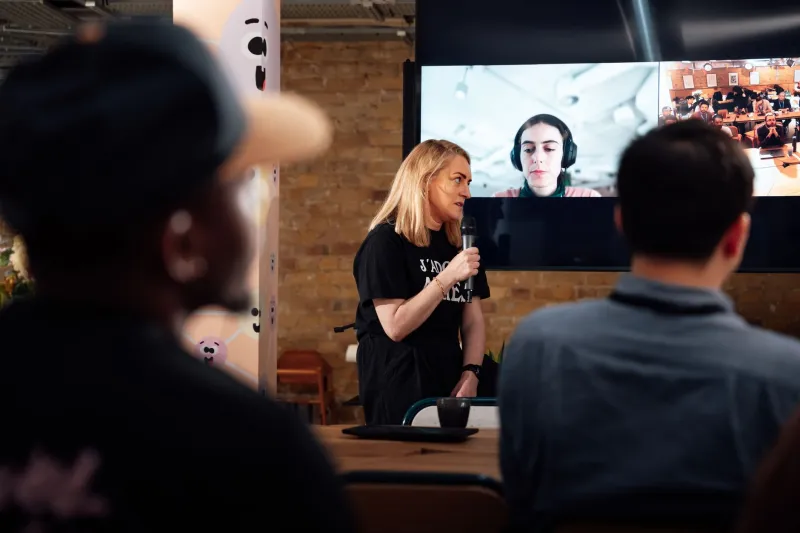
At GDG Chennai, the community has been operating across time zones for years — coordinating with Google developer advocates in the US, collaborating with GDG chapters globally, and running events that require tight logistics across wildly different schedules. That kind of operational reality has a way of forcing clarity.
What emerged wasn't a rejection of communication tools. It was a structural rethink of when and why those tools get used.
The shift started with a simple question the community kept asking itself: Does this conversation need to happen right now, or does it need to be documented?
More often than people initially expected, the answer was the latter. Sprint retrospectives that used to run as 90-minute video calls got replaced with structured written prompts and async video responses — contributors could record a two-minute Loom, drop it into a shared doc, and the whole team had richer, more considered input than any live session had ever produced.
Decisions stopped living in chat threads that scrolled out of view. They moved into decision logs — lightweight documents that captured the context, the options considered, and the rationale. New contributors could onboard without needing someone to "walk them through it" in real time.
The Deep Work Dividend
When you stop treating every question as an emergency and every update as a meeting trigger, something interesting happens: developers get their mornings back.
GDG Chennai members who work on collaborative open-source projects have talked about this shift openly at community events. The ability to block two to three uninterrupted hours in the morning — before the async threads even need responses — is where the actual engineering happens. Features get built. Architecture decisions get thought through. Code gets reviewed with actual attention rather than a rushed glance between meetings.
This isn't a Chennai-specific insight. GDG chapters in Berlin, Nairobi, and São Paulo have reported similar patterns when they've moved toward structured async workflows. The throughput goes up. The burnout goes down. And ironically, the quality of the synchronous interactions that do happen improves dramatically, because they're no longer carrying the weight of every small decision.
What Async-First Actually Looks Like in Practice
Let's be specific, because "go async" is advice that sounds obvious until you try to implement it and your team reverts to old habits within a week.
The GDG communities that are doing this well share a few structural patterns:
Documented decision-making as a first-class habit. Every significant technical or community decision gets a written record — not a Slack thread, not a chat summary, but an actual document with context and outcome. This sounds like overhead until you realize how much time gets wasted re-litigating decisions that were never clearly made.
Meeting criteria that actually hold. Not every standing meeting survives scrutiny when you ask: what would happen if we replaced this with a well-structured async update? For GDG Chennai's working groups, the answer was often that the meeting was really just a status check — and status checks don't need 45 minutes of everyone's calendar.
Intentional synchronous time. The meetings that do happen are protected and purposeful. Creative problem-solving, relationship-building, complex technical debates where real-time back-and-forth matters — those stay on the calendar. But they're events, not background noise.
Tools that support async, not just enable chaos. Notion for documentation, Loom for quick video updates, GitHub for code review discussions that live alongside the code itself — the tooling choices matter, and they should reinforce the culture rather than undermine it.
Why US Teams Are Paying Attention
For American engineering teams, the pull toward synchronous culture is strong. Office norms, investor optics, and a long history of equating visibility with productivity all push in that direction. Even fully remote teams often replicate in-office meeting culture on Zoom — just with worse lighting.
But the distributed teams that are winning right now aren't the ones with the best video conferencing setups. They're the ones that have figured out how to make progress while people sleep, how to make decisions that stick without a live audience, and how to build trust through consistent written communication rather than constant face time.
GDG Chennai's community is a working model of what that looks like — not as a theoretical framework, but as a lived practice that's been stress-tested across real projects, real time zones, and real deadlines.
The Real Collaboration Upgrade
The irony is that going async-first doesn't make teams feel more distant. Done right, it makes collaboration feel more considered. People respond when they have something worth saying. Documentation creates shared context that levels the playing field regardless of time zone or seniority. And the meetings that do happen carry actual energy because they're not competing with seventeen other calendar blocks.
If your team is staring down a stack of recurring syncs and wondering why shipping still feels slow, the answer probably isn't a better Zoom background or a new project management tool. It's a harder question: are we collaborating, or are we just staying busy together?
GDG Chennai has been asking that question for a while now. The answers are worth the trip — even if the trip is just logging into a community thread at your own pace, whenever your morning actually starts.