How GDG Chennai Built a Tech Community That Never Sleeps — And Why US Meetup Organizers Are Paying Attention
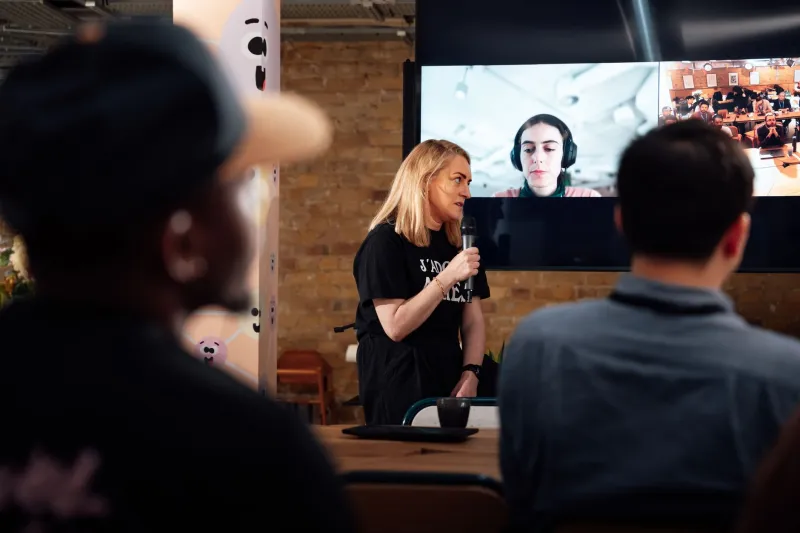
There's a moment that happens at a lot of tech meetups across the US. Someone posts a recording of a great talk to YouTube three weeks after the event. Maybe 40 people watch it. The comments section is dead. The conversation that happened in the room that night? Gone forever.
GDG Chennai looked at that model and decided to do something different.
Not because they had some grand vision for reinventing community building. Mostly because they had no choice. When your community members are spread across Chennai, Bangalore, Singapore, London, and a growing number of US cities — and when your most engaged participants are developers collaborating with American teams on opposite ends of the clock — you either figure out async-first event design or you lose half your audience before the first slide loads.
What they built in the process has quietly become one of the more interesting models in global tech community organizing.
The Problem With "Just Record It"
Here's something most meetup organizers get wrong: recording a talk is not the same thing as making it accessible.
Dropping a raw video file somewhere online with a vague title and no context doesn't create participation. It creates an archive. And archives don't build communities — conversations do.
GDG Chennai's approach starts way before anyone hits record. The community treats async engagement as a first-class citizen of every event, not an afterthought. That means the question isn't "how do we record this talk?" It's "how do we make someone who watches this six days later in Denver feel like they were actually there?"
The difference in framing changes everything downstream.
Designing Events That Work in Two Directions
Every GDG Chennai event is essentially designed twice. Once for the people in the room (or on the live stream), and once for the distributed audience who will engage with it asynchronously.
For the live audience, it's the energy, the Q&A, the hallway conversations, the networking that happens when someone recognizes a face from a previous event. That stuff is irreplaceable and GDG Chennai doesn't try to fake it.
For the async audience, the design looks completely different. Talks are structured so they make sense without the surrounding context. Speakers are briefed to treat their sessions as standalone resources, not chapters in a longer story. Key discussion questions get posted to the community Discord before the event even starts, so the conversation is already warm when the recording goes live.
That pre-seeding of discussion is something US meetup organizers almost never do. It costs almost nothing. The payoff is a comment section that looks alive rather than abandoned.
The Scheduling Philosophy Nobody Talks About
Timing is where GDG Chennai gets genuinely creative.
Most US-based tech meetups schedule for the convenience of the local audience — Tuesday evenings in San Francisco, Thursday nights in New York. Which makes complete sense if your community is entirely local. But the moment you have members in multiple cities, let alone multiple continents, "convenient" becomes a political statement about whose time matters.
GDG Chennai has experimented with rotating event windows that deliberately rotate inconvenience. Sometimes the live slot favors the India audience. Sometimes it's shifted to catch the US East Coast morning. The point isn't to find a perfect time that works for everyone — that time doesn't exist. The point is to signal that no single geography is the permanent default.
Combine that with a consistent commitment to having a fully produced async version live within 24 hours, and you stop punishing people for being in the wrong time zone.
Engagement That Doesn't Expire
One of the underrated innovations in GDG Chennai's model is the idea of "evergreen engagement windows."
Most meetup communities treat an event as a discrete moment in time. It happens, it ends, everyone moves on. GDG Chennai structures discussions so they stay genuinely open for two to three weeks after an event wraps. Moderators actively revisit older threads, tag new members who might have relevant perspectives, and occasionally pull async questions back into subsequent live sessions.
This does something subtle but powerful: it tells community members that their participation matters even if they couldn't show up on the night. A developer in Austin who watches a recorded talk on a Sunday afternoon and drops a thoughtful comment doesn't feel like they're shouting into a void. They feel like part of the conversation.
That's how you build retention in a distributed community. Not with better swag or fancier venues — with the signal that your voice has a home here regardless of when you show up.
What US Organizers Can Actually Steal From This
Let's get practical, because the GDG Chennai model isn't magic — it's a set of repeatable decisions that any tech community can adapt.
Document the meta, not just the content. When you publish a recording, include a written summary of the key discussion points, the questions that came up, and the threads worth following. This isn't a transcript — it's a map for someone coming in late.
Create a "watch party" culture. GDG Chennai has experimented with structured async watch parties where a cohort of distributed members agrees to watch a recording at the same time and discuss it in a shared channel. It's a low-tech way to recreate the social energy of a live event for people who couldn't attend.
Brief your speakers differently. Ask speakers to think of their talk as a resource someone might find six months from now, not just a performance for tonight's crowd. That framing changes how they handle context-setting, examples, and pacing.
Stop treating in-person as the gold standard. This is the cultural shift that's hardest for US meetup organizers to make. As long as async participation feels like second-best, you'll never fully design for it. GDG Chennai treats distributed engagement as a feature of the community, not a consolation prize.
Why This Matters Beyond Chennai
The tech industry talks a lot about distributed teams and remote-first work. It talks considerably less about what distributed community actually looks like when it's done intentionally.
GDG Chennai didn't build its async-first model because it was trendy. It built it because the community it was trying to serve demanded it. Developers working across Chennai and California don't have the luxury of pretending time zones don't exist. So the community stopped pretending too.
The result is an event model that's genuinely more inclusive, more durable, and — here's the part US organizers might find surprising — more engaging for local members too. When you design for the hardest use case, everyone benefits.
American tech communities are sitting on a version of this problem right now. Remote work has scattered their memberships. Hybrid events feel awkward. Nobody's sure how to make a Zoom attendee feel as valued as the person eating pizza in the conference room.
GDG Chennai figured out a version of that answer not in a design sprint or a strategy offsite, but through years of showing up for a community that refused to be constrained by geography.
That's worth studying. And maybe worth stealing.