From Chennai to Silicon Valley: How a Local Dev Community Is Quietly Changing Global Tech

Photo by Photo by Speedy Sandy on Unsplash on Unsplash
The Room Where It Starts
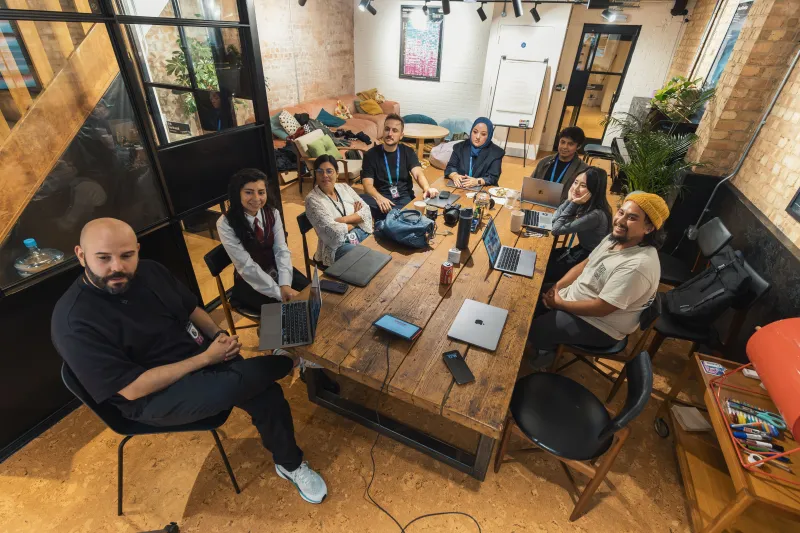
Picture a Saturday morning in Chennai. Developers are filing into a community space, laptops open, chai in hand, ready to dig into a deep-dive session on Kubernetes or Flutter or whatever's been buzzing on the internet that week. There's no corporate agenda. No vendor pitch. Just engineers helping engineers get better at their craft.
That's the heartbeat of GDG Chennai — and if you think it only matters locally, you'd be wrong.
Across the globe, decision-makers in San Francisco, Austin, and New York are feeling the downstream effects of what communities like this one are building. And most of them have no idea it's happening.
India's Developer Base Is Not a Pipeline. It's a Powerhouse.
For too long, the American tech industry has looked at India's developer community through a narrow lens — a talent pipeline, an outsourcing hub, a cost-optimization strategy. That framing misses the point entirely.
India is home to one of the largest and fastest-growing developer populations on the planet. GitHub's annual Octoverse reports have consistently flagged India as a top contributor to open-source projects, with growth rates that outpace most Western nations. And a significant chunk of that energy is being cultivated right at the community level — in GDGs, DevFests, hackathons, and study jams happening in cities like Chennai.
"The myth is that innovation only flows one direction — from Silicon Valley outward," says one GDG Chennai organizer who has been running events for over five years. "But the reality is much more dynamic. The tools we teach here, the use cases we explore, the problems we solve — they feed back into the global ecosystem in ways that are hard to trace but impossible to ignore."
Open Source Is Where the Ripple Becomes a Wave
One of the clearest ways GDG Chennai's influence reaches the US is through open-source contribution. Workshops on Google technologies — Angular, TensorFlow, Firebase, Flutter — don't just teach attendees to use these tools. They create confident contributors who file issues, submit pull requests, and build extensions that developers worldwide rely on.
When a Chennai developer solves a localization bug in a widely-used library, that fix ships globally. When a workshop participant builds a Flutter package for handling regional language inputs, it becomes part of an ecosystem that US developers pull into their own projects without a second thought.
This isn't hypothetical. It's the quiet, unglamorous machinery of how open-source actually works — and community groups like GDG Chennai are running significant parts of it.
Cross-Border Collaboration Is Getting Real
Something interesting has been happening in the post-pandemic tech world: geographic boundaries matter less, and community ties matter more. GDG Chennai has hosted virtual sessions with speakers from Google's US campuses, co-organized events with GDG chapters in Europe, and built informal mentorship bridges between junior developers in Tamil Nadu and senior engineers at US-based startups.
For American tech leaders, this should be more than a feel-good story. It's a signal about where developer networks are heading. The old model — hire locally, train internally, stay siloed — is being replaced by something more fluid and community-driven. Companies that understand how to tap into these global developer networks will have a serious edge in both recruitment and innovation.
"We've had attendees at our workshops who went on to join Google, Microsoft, and a bunch of US-based startups," notes another community organizer. "But more importantly, they carried a certain culture with them — collaborative, curious, community-first. That's something you can't manufacture in a corporate onboarding program."
The DevFest Effect: Local Events, Global Impact
GDG Chennai's annual DevFest is one of the flagship moments in the local tech calendar. Hundreds of developers show up for a full day of talks, hands-on labs, and networking. The sessions are recorded, shared, and watched by developers far beyond Chennai's city limits.
But the real impact isn't in the livestream numbers. It's in the conversations that happen after — the GitHub repos that get forked, the Slack channels that spin up, the startup ideas that get sketched on napkins. These are the compounding returns of community investment, and they don't show up in any single metric.
For US tech companies wondering why certain engineering candidates arrive with a remarkable depth of practical knowledge and a strong collaborative instinct, this is a big part of the answer. They've been training — not in a bootcamp, but in a community.
What This Means for the US Tech Industry
If you're an engineering manager, a startup founder, or a tech recruiter in the United States, GDG Chennai's story carries a few practical lessons.
First, the talent coming out of these communities isn't just technically skilled — it's community-conditioned. These developers know how to share knowledge, mentor peers, and contribute to something larger than their own career trajectory. That's increasingly rare, and increasingly valuable.
Second, the global developer ecosystem is more interconnected than most US companies treat it. Building relationships with communities like GDG Chennai — through sponsorships, speaker exchanges, or even just showing up as a participant — is an investment with real returns.
And third, the innovation happening in these rooms isn't derivative. It's original, context-driven, and often ahead of the curve on emerging tech adoption. India's developers aren't waiting for Silicon Valley to tell them what's next. They're figuring it out themselves — and sharing it freely.
Building Bridges, Not Just Pipelines
The most important shift in how US tech should think about communities like GDG Chennai is moving from extraction to exchange. Not "how do we hire from this pool" but "how do we build something together."
That's the spirit GDG Chennai has been operating with from day one — build, connect, and grow. It's a simple idea, but it scales. From a weekend workshop in Chennai to a pull request merged into a codebase running on servers in Virginia, the thread is real.
The global developer culture being shaped right now isn't being written only in Mountain View or Seattle. Some of the most important chapters are being drafted in community spaces across India — and Chennai is one of the places where the writing is sharpest.