5 Things American Tech Leaders Can Steal From India's Developer Community Playbook
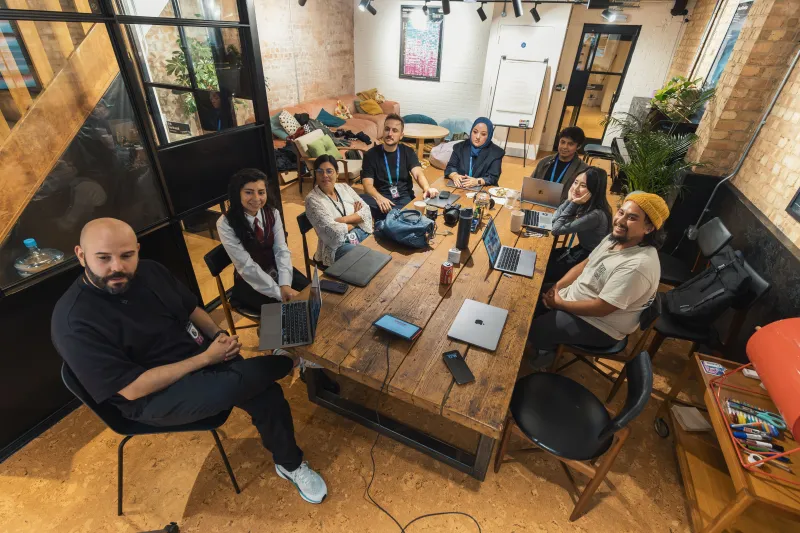
Photo: tech leadership workshop collaboration diverse engineering team, via images.pexels.com
Let's Be Honest About the Problem
American tech is struggling. Layoffs, burnout, a fractured sense of professional community, and a recruitment pipeline that feels less reliable by the quarter. Engineering managers are caught between pressure to ship faster and teams that feel increasingly disconnected from each other and from the craft itself.
Meanwhile, developer communities in India — and GDG Chennai is one of the best examples — are doing something remarkable. They're growing, retaining members, producing skilled contributors, and building a culture of genuine collaboration without massive corporate budgets or HR initiatives.
So what's the secret? Honestly, it's not a secret at all. It's just being executed really well. Here are five things US tech leaders should be taking notes on.
1. Make Knowledge-Sharing the Product, Not the Perk
At most American tech companies, internal knowledge-sharing is a nice-to-have. There's a Confluence page nobody updates, a monthly all-hands where leadership talks at engineers, and maybe a quarterly lunch-and-learn if the budget allows.
GDG Chennai flips this model entirely. Knowledge-sharing isn't a feature of the community — it is the community. Every event, every workshop, every study jam is built around the premise that sharing what you know is the most valuable thing you can do.
The practical takeaway for US engineering managers: treat internal tech talks as a primary output, not a side activity. Give engineers dedicated time to prepare and present. Create a culture where teaching your colleagues is recognized as real work — because it is. Companies like Stripe and Thoughtworks have done versions of this well. More teams need to follow.
When knowledge-sharing becomes normalized, two things happen: institutional knowledge stops walking out the door when people leave, and junior engineers level up dramatically faster. Both of those outcomes are worth a lot more than whatever productivity you think you're losing by pulling someone off a sprint for a few hours.
2. Rethink Mentorship — It Doesn't Have to Be Formal to Be Effective
Corporate mentorship programs in the US tend to follow a familiar pattern: HR pairs people up, both parties feel mildly obligated, the relationship fizzles out after three months, and the program gets quietly retired until someone new joins HR and restarts the cycle.
In GDG Chennai's world, mentorship is organic and ongoing. Senior developers show up to events not because they're assigned to but because they genuinely enjoy helping people work through problems. The mentorship is embedded in the activity — in the workshop, in the hackathon, in the post-event chat over coffee.
For US tech leaders, the lesson is to stop trying to formalize something that works best when it's informal. Instead of pairing programs, create the conditions for mentorship to happen naturally. That means mixed-level teams, open office hours that people actually use, internal Slack communities organized around interests rather than org charts, and leadership that models curiosity and vulnerability.
Mentorship happens when experienced people are accessible and junior people feel safe asking questions. Everything else is just structure.
3. Inclusive Networking Is a Competitive Advantage
Networking in US tech has a reputation problem, and honestly, it's earned. The classic tech networking event — awkward standing around with a drink, talking to people who are already in your circle — doesn't serve most people well. It especially fails developers who are introverted, new to the industry, or don't fit the dominant demographic.
GDG Chennai has built a networking culture that actually works for a wider range of people. Events are structured around shared activities — coding challenges, collaborative workshops, group discussions — which gives people a reason to talk that isn't just "so what do you do." The community actively works to welcome developers at all levels, from students to senior engineers.
The business case for inclusive networking isn't just ethical — it's financial. Research from McKinsey and Deloitte has consistently shown that diverse teams outperform homogeneous ones on innovation metrics. If your networking culture only works for a narrow slice of your potential talent pool, you're leaving capability on the table.
US tech companies should be auditing their internal and external networking events with a simple question: who does this actually work for? Then redesign accordingly.
4. Community-Driven Innovation Beats Top-Down R&D
Here's something that doesn't get enough attention: some of the most interesting real-world applications of Google technologies — TensorFlow, Flutter, Firebase — have been pioneered not in Google's own labs but in community spaces like GDG Chennai, where developers are applying these tools to local problems with global relevance.
When you give developers the freedom to explore and the community to explore with, you get innovation that no internal roadmap would have predicted. This is the open-source model applied to culture, and it works.
For US tech leaders, the implication is clear: your best ideas are probably not coming from your quarterly planning cycle. They're coming from the engineers closest to the problem, if you create space for those insights to surface. Hackathons, internal innovation days, and cross-functional problem-solving sessions aren't just morale boosters — they're legitimate innovation infrastructure when done right.
GDG Chennai doesn't wait for Google to tell it what to build next. It figures it out from the ground up. US engineering teams that adopt this posture will move faster and retain the engineers who are most driven by creative ownership.
5. Consistency Builds Culture. Events Build Moments. You Need Both.
One of the most underrated things GDG Chennai does is show up consistently. Month after month, there are events — study jams, workshops, speaker sessions, networking meetups. The community doesn't exist only when it's convenient or when there's a big announcement to make. It exists because people keep showing up.
This consistency creates something that's genuinely hard to manufacture: trust. Members know that GDG Chennai will be there. That reliability is the foundation on which deeper community bonds are built.
US tech companies often think about culture in terms of big moments — the offsite, the team retreat, the company-wide hackathon. Those matter. But they only work if there's a consistent underlying rhythm of connection that makes people feel like they belong the other 49 weeks of the year.
For engineering managers, this translates to: regular team rituals matter more than occasional big gestures. A weekly 15-minute team standup where people actually talk to each other, a monthly team lunch, a recurring internal newsletter — these small, consistent touchpoints are what culture is actually made of.
The Bigger Picture
None of these lessons require a massive budget or a corporate initiative. They require intention, consistency, and a genuine belief that the community around your engineers is as important as the technology they're building with.
GDG Chennai has been proving this for years — building, connecting, and growing a developer community that punches well above its weight on the global stage. US tech leaders who pay attention will find that the playbook was open the whole time.
The only question is whether they're willing to learn from it.
