Radical Transparency: How Chennai's 'Build in Public' Culture Is Cracking Open Silicon Valley's Closed Doors
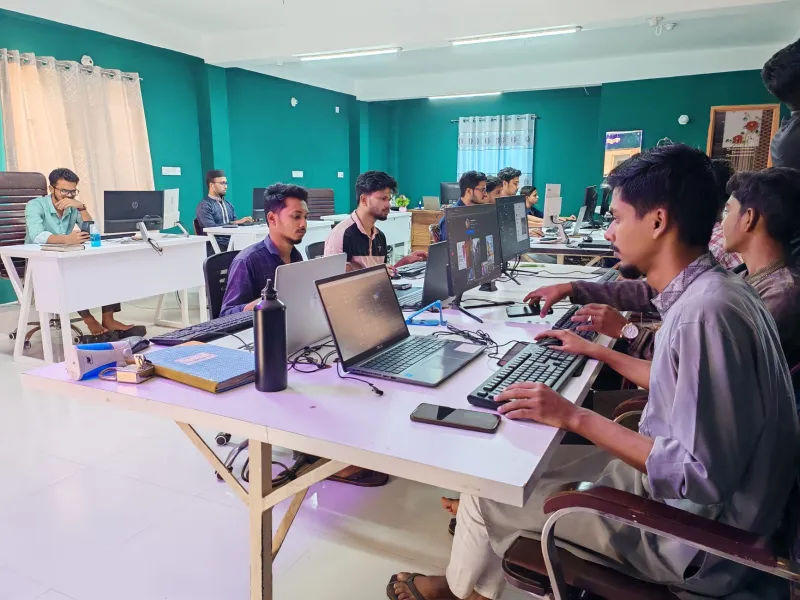
There's a certain irony in watching some of the world's most secretive tech companies slowly — almost reluctantly — embrace the idea that showing your work might actually be a competitive advantage. For anyone who's spent time inside GDG Chennai's community, though, this isn't a revelation. It's Tuesday.
The "build in public" ethos has been woven into Chennai's developer culture for years. Developers here share half-finished projects in community Slack channels. They livestream debugging sessions that go sideways. They post about failed experiments on Twitter before they've figured out what went wrong. And somehow, instead of looking weak, they've built one of the most respected grassroots tech communities in Asia. US tech leaders are starting to pay attention — and more importantly, starting to copy the homework.
What "Build in Public" Actually Means (And What It Doesn't)
Let's clear something up first. Building in public isn't the same as open source, and it's not just writing a post-mortem after something blows up. It's a cultural posture — a decision to make the process of building as visible as the finished product.
At GDG Chennai events, this shows up constantly. A developer presenting at a workshop might share a GitHub repo that's still half-broken. A speaker might walk through a live debugging session with no guaranteed happy ending. The community doesn't flinch. They lean in, offer suggestions, and collectively problem-solve in real time. The vulnerability isn't a bug — it's the feature.
In the US, this kind of transparency has historically been treated like a liability. Why show competitors what you're working on? Why let users see the ugly middle part? The instinct to protect intellectual territory runs deep in Silicon Valley's DNA, going all the way back to the garage-startup mythology of secrecy-as-strategy.
The Shift That's Already Happening
But something's cracking. Over the past couple of years, you've seen a growing number of US tech teams — from early-stage startups to mid-size SaaS companies — start to experiment with radical openness in ways that would have felt career-ending a decade ago.
Engineering blogs have gotten more honest. Companies like Linear, Vercel, and a handful of developer-tools startups have built entire brand identities around sharing their architectural decisions, their mistakes, and their reasoning in real time. Some teams are literally streaming their sprint planning sessions on YouTube. Others are posting raw changelogs that include lines like "we broke this, here's why, here's what we're doing about it."
None of this happened in a vacuum. The developer communities that have thrived most visibly in recent years — and Chennai's is high on that list — have been the ones where sharing wasn't just encouraged but expected. That cultural norm has been slowly exported, partly through the diaspora of Indian developers now embedded in US tech teams, and partly through the global visibility that events like GDG community meetups have built over time.
Why Transparency Builds Better Software (And Better Teams)
Here's the practical case, beyond the feel-good stuff. When you build in public, you get feedback at the stage when it's actually cheap to act on it. You catch assumptions that your internal team has collectively stopped questioning. You attract contributors, collaborators, and users who feel invested in what you're building because they watched it get built.
At GDG Chennai, the community has seen this play out in tangible ways. Projects that got workshopped openly at meetups — with real-time feedback from developers across different experience levels — consistently shipped faster and with fewer post-launch fires than projects that stayed internal until "ready." The definition of "ready" changed when the community became part of the development process.
For US teams, there's also a talent angle here that's hard to ignore. Developers increasingly want to work somewhere that treats knowledge-sharing as a value, not a vulnerability. A company that livestreams its debugging sessions signals something about its internal culture — that it's okay to not have all the answers, that learning is public and collaborative, that the team isn't performing competence so much as actually practicing it.
The Secrecy Hangover
That said, the transition isn't frictionless. There's a real tension between transparency and the legitimate need to protect competitive work, especially in product companies where the roadmap is the moat. Not every team can or should share everything. And there's a version of "build in public" that's really just marketing — carefully curated vulnerability designed to look authentic without actually risking anything.
Chennai's developer community has navigated this honestly. The openness here isn't performative. When a developer shares a broken project at a GDG meetup, they're not doing it because it makes them look humble and relatable. They're doing it because the community norm is that everyone's still figuring things out, and pretending otherwise wastes everyone's time.
US teams adopting this philosophy will have to wrestle with what genuine transparency looks like in a corporate context — and that's a harder question than it sounds. The culture shift has to go deeper than a public Notion doc or a "building in public" tweet thread.
What GDG Chennai Gets Right That's Worth Stealing
A few things stand out from how this community has made radical openness actually work:
Psychological safety comes first. The reason people share unfinished work at Chennai meetups is because they know the response will be generative, not judgmental. Before you can build in public, you have to build internal cultures where failure isn't career-defining.
Community input is treated as signal, not noise. When feedback comes in from outside the core team, it gets taken seriously. That requires humility that doesn't come naturally to teams that have been operating in isolation.
The process is documented as carefully as the product. GDG Chennai workshops often include not just what was built but how decisions were made. That kind of process documentation becomes enormously valuable — for onboarding, for iteration, for institutional memory.
The Bigger Picture
What's happening here isn't just a trend in developer culture. It's a signal about where the locus of innovation is shifting. The communities that have been building in public for years — often outside the traditional tech hubs, often without the resources to afford secrecy as a strategy — are producing developers who are more collaborative, more adaptable, and frankly more interesting to work with.
US tech is catching on. And if you want to understand why, look at what GDG Chennai has been doing quietly, consistently, and openly for years. The debugger's dilemma — whether to hide the mess or share it — is getting resolved in favor of sharing. Chennai called it first.