Boots on the Ground: Why US Tech Giants Are Planting Flags in Chennai Instead of Just Hiring Remote

The Paradox Nobody Saw Coming
Here's a weird thing that happened after the remote work revolution: American tech companies got really, really interested in building physical offices in India.
Not hiring remote workers in India — though they do plenty of that too. Actually constructing campuses. Signing multi-decade leases. Moving senior engineering leadership halfway around the world to set up shop in cities like Chennai, Hyderabad, and Bengaluru. At a moment when Zoom fatigue had everyone questioning whether offices mattered at all, US firms were quietly doing the opposite of what their own remote-first manifestos preached.
It sounds contradictory. It isn't.
What Remote Work Actually Can't Do
Let's be honest about something the tech industry spent 2020 through 2022 pretending wasn't true: proximity still matters for certain kinds of work. Not all work — plenty of engineering tasks are genuinely location-agnostic. But the messy, collaborative, whiteboard-intensive process of early-stage R&D? That stuff benefits enormously from people being in the same room.
The companies that figured this out early started looking at where the talent was clustering — not just where individual engineers happened to live, but where dense ecosystems of developers, researchers, and technical leaders had organically formed. Chennai kept showing up on that list.
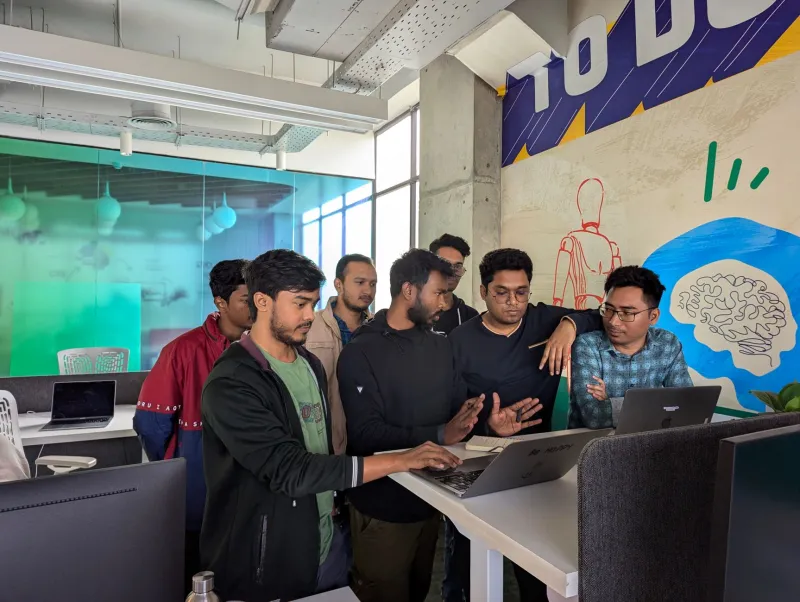
And a big part of why Chennai kept showing up is the kind of grassroots developer culture that communities like GDG Chennai have been building for years. When you have thousands of engineers who regularly get together to talk about Google Cloud architecture, machine learning pipelines, and Flutter development — not because a corporation told them to, but because they genuinely want to — you end up with a talent cluster that's hard to manufacture from scratch.
The Math That Makes CFOs Happy
Cost is obviously part of the conversation, and it would be dishonest to pretend otherwise. Establishing an R&D center in Chennai is significantly more cost-effective than building equivalent capacity in San Francisco or Seattle, even accounting for infrastructure investment, relocation expenses, and the operational complexity of managing a global team.
But here's what the purely cost-focused narrative misses: the companies that are winning in Chennai aren't just arbitraging salaries. They're accessing a talent density that genuinely doesn't exist in most American metros outside of a handful of zip codes.
Think about what it means to hire in a city where engineering is culturally prestigious, where technical education pipelines are deep and well-established, and where developer communities have been self-organizing around cutting-edge technology for over a decade. You're not just getting cheaper labor. You're getting engineers who have been learning from each other in ways that formal corporate training programs rarely replicate.
The Timezone Advantage That Actually Works
There's a version of the timezone story that gets told as a disadvantage — the classic "nobody's awake at the same time" complaint about offshore teams. But the companies building serious R&D operations in Chennai have figured out that a 10-to-12-hour offset can be a feature, not a bug.
When your Chennai team ships work at the end of their day, your US team picks it up at the start of theirs. Done right, you get close to 24-hour development velocity without burning anyone out with overnight calls. The key word there is "done right" — which requires real investment in team structure, documentation culture, and genuine parity between locations. That's exactly the kind of organizational work that a physical office presence makes dramatically easier than a collection of remote contractors.
GDG Chennai as an Accidental Innovation Lab
Here's something that doesn't get enough attention in the corporate strategy discussions: developer communities like GDG Chennai have been functioning as informal R&D incubators for years before any American company decided to plant a flag here.
The workshops, tech talks, and hackathons that happen through GDG Chennai aren't just networking events. They're environments where engineers work through real technical problems together, where early-career developers get mentored by people who've shipped production systems at scale, and where ideas get stress-tested by a community that has no patience for buzzwords without substance.
When a US tech company opens an office in Chennai and starts hiring, they're often hiring people who came up through exactly that kind of community. They're inheriting institutional knowledge and collaborative habits that took years to develop. That's not something you can replicate by spinning up a Slack channel and calling it a remote team.
What This Means for the Future of Tech Work
The remote-first paradox isn't really a paradox once you zoom out. What we're watching is a more nuanced understanding of where physical presence adds value — and a recognition that the most valuable places to be physically present aren't necessarily the most expensive American cities.
For US tech workers, this trend is worth paying attention to. The companies building serious technical capacity in Chennai aren't doing it as a cost-cutting measure that will eventually be reversed. They're doing it because they've identified a genuine competitive advantage in having access to a developer ecosystem that's both deeply talented and structurally different from what they can find at home.
For the Chennai developer community, it represents something significant: external validation that what's been built here organically, through years of meetups and workshops and shared technical obsession, has real and lasting value. The corporations are showing up because the community was already here.
That's not a small thing. That's the whole story.