Working While America Sleeps: What US Tech Teams Are Finally Learning from Chennai's Async-First Developers

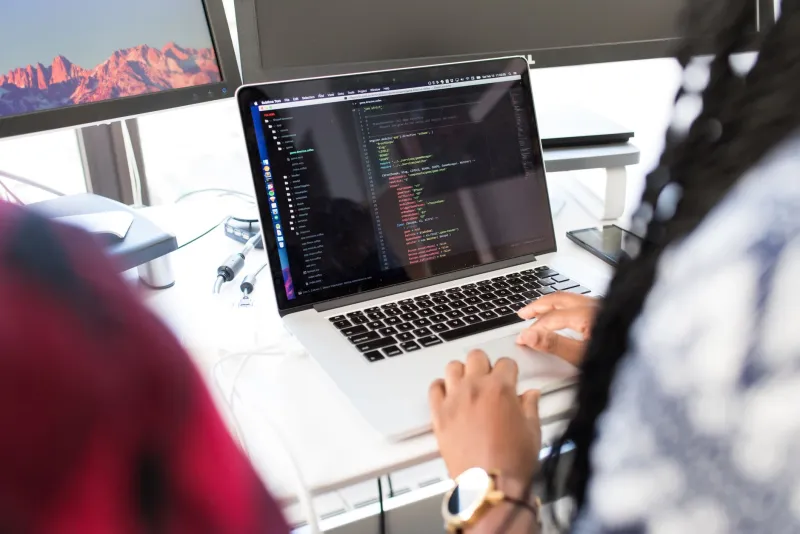
Somewhere between 11 PM and 2 AM Chennai Standard Time, a Slack thread is still humming. A pull request is getting reviewed. A shared doc is filling up with comments from developers who finished their morning coffee hours ago. And by the time a product manager in Austin opens their laptop at 9 AM, there's already a full day's worth of thoughtful, well-documented progress waiting for them.
This isn't a fluke. It's a culture — one that GDG Chennai's developer community has been quietly perfecting for years, and one that US tech teams are only now starting to take seriously.
The Sync-First Trap That US Companies Keep Falling Into
American tech culture has a meeting problem. The default response to any ambiguity is a calendar invite. Got a question? Schedule a call. Need a decision? Block off 30 minutes. The assumption is that real work happens in real time — and anything that doesn't fit that window gets delayed.
For companies with distributed teams, especially those partnering with developers in India, this mindset is genuinely expensive. It means engineers in Chennai are either pulling late-night shifts to accommodate US hours, or entire workdays are lost waiting for a single synchronous touchpoint to unblock progress.
Developers in GDG Chennai's community have lived this friction. But rather than just complaining about it, many of them have built workflows — and community practices — that sidestep the problem entirely.
How GDG Chennai Accidentally Built an Async Playbook
GDG Chennai didn't set out to create a remote work methodology. The community grew organically around tech talks, hands-on workshops, and developer networking events. But because members are distributed across different companies, schedules, and sometimes even sub-regions of Tamil Nadu, the group had to figure out how to keep knowledge flowing without relying on everyone being in the same room at the same time.
The result? A surprisingly robust async-first culture that shows up in how the community shares resources, organizes events, and keeps conversations going between meetups.
A few things stand out:
Documented everything, assumed nothing. GDG Chennai event recaps, workshop notes, and session recordings are treated as first-class deliverables — not afterthoughts. If you missed a talk, you're not out of the loop. The information lives somewhere accessible, searchable, and shareable.
Threaded conversations over live chats. Community discussions happen in structured threads where context travels with the message. No one has to scroll back through 200 unrelated messages to understand why a decision was made.
Asynchronous Q&A after live sessions. Even when events are live, the conversation continues asynchronously afterward. Speakers often field questions over the next 24–48 hours in community forums, which means participants from different time zones can engage meaningfully without having been present in real time.
These aren't revolutionary tools. But the discipline with which GDG Chennai's community applies them is something US teams often lack.
What American Developers Who've Joined Chennai Meetups Say
US engineers who've tuned into GDG Chennai sessions — and yes, plenty do, often at odd hours — frequently comment on one thing: how much context is baked into every communication.
When someone asks a question in a GDG Chennai thread, they typically include what they've already tried, what the expected versus actual outcome was, and what documentation they've already checked. It's the kind of structured communication that makes async collaboration actually work, because the person responding doesn't have to play 20 questions before they can be useful.
This stands in contrast to what a lot of US remote teams experience: a culture where people still communicate as if they're going to bump into each other in the hallway. Vague Slack messages. Context-free pings. Questions that require three follow-up exchanges to even understand.
The difference isn't a technology gap. It's a communication discipline gap.
Tools Help, But Mindset Is the Real Variable
For the record, GDG Chennai developers aren't using some secret stack that US teams don't have access to. Google Workspace, GitHub, Discord, Notion, YouTube — these are standard-issue tools on both sides of the world. The difference is in how intentionally they're used.
Take Google Meet recordings, for example. In a lot of US companies, meeting recordings exist but nobody really watches them. They're a CYA artifact, not a genuine knowledge resource. In contrast, many Chennai-based developers treat session recordings as living reference material — something you clip, timestamp, and link to in documentation.
Or consider how community knowledge gets preserved. GDG Chennai maintains resources that let a developer who joined the community six months ago get up to speed on conversations that happened a year ago. That kind of institutional memory doesn't build itself. Someone has to decide it matters and invest in maintaining it.
The Business Case for US Companies to Pay Attention
Here's where this gets practical for American tech leaders: if your company works with development teams in India — or is thinking about it — the async habits that Chennai's developer community has normalized aren't just a cultural curiosity. They're a competitive advantage you're probably leaving on the table.
Teams that communicate well asynchronously move faster. They make fewer decisions in a vacuum. They produce documentation as a byproduct of doing the work, rather than as a separate task that nobody wants to do. And they're better at bringing new people up to speed without the knowledge being locked inside a single person's head.
The GDG Chennai model suggests that a lot of this comes from community norms — the expectations a group sets for itself about how information should flow. US tech companies can set those norms too. It just requires being intentional about it, rather than defaulting to "let's hop on a quick call."
Building Better Bridges
The broader point here isn't that Chennai developers are doing remote work right and American developers are doing it wrong. It's that the conditions under which Chennai's developer community operates — distributed schedules, time zone gaps, limited windows for synchronous communication — have forced a kind of disciplined async practice that US teams haven't had the same pressure to develop.
Now that remote and hybrid work are permanent fixtures of the US tech landscape, that pressure is finally arriving stateside. And communities like GDG Chennai, which have been navigating this terrain for years, are worth paying attention to.
The next time a US tech lead is tempted to schedule a 30-minute sync to answer a question that could've been a well-written message, maybe the better move is to think about what a developer in Chennai would do at midnight — and do that instead.