How Chennai Developers Crack Bugs That Stump Silicon Valley — And Why US Teams Are Taking Notes

Photo by Photo by Vitaly Gariev on Unsplash on Unsplash
When the Bug Queue Hits a Wall, Chennai Picks Up the Phone
Every senior engineer in the US has lived through that particular brand of misery: a production bug that sits in the backlog for three sprints, gets assigned and reassigned, spawns a Confluence page nobody reads, and eventually dies quietly in a release note. The system didn't fail because your team was incompetent. It failed because of how the problem was approached.
That's the conversation happening in more and more American engineering orgs right now — and it keeps circling back to something developers in Chennai have been doing for years without making a big deal of it.
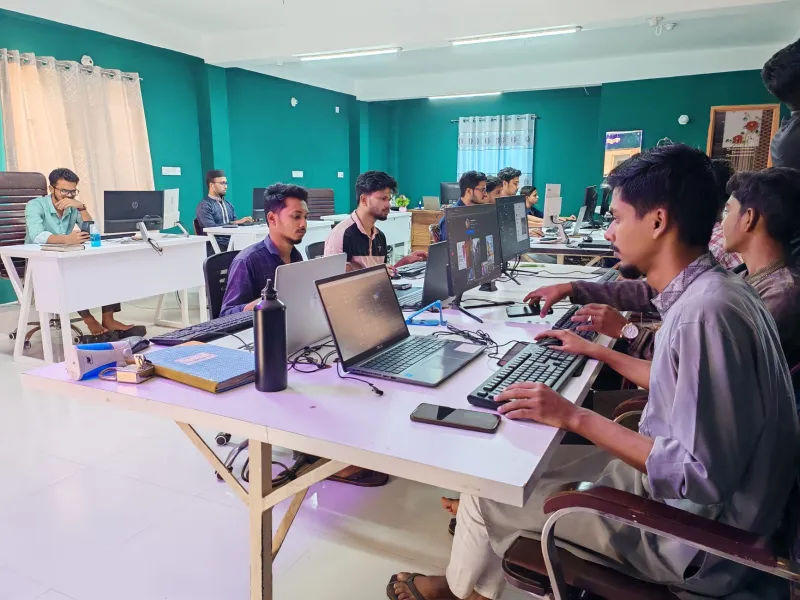
At GDG Chennai meetups, debugging isn't a solo sport. It never really was. When a developer hits a wall, the instinct isn't to open a Stack Overflow tab and disappear for two hours. It's to pull someone in. Not a manager. Not a formal code review. Just another set of eyes, another mental model, another way of reading the same broken stack trace. That cultural reflex — low-ego, high-collaboration, deeply practical — is what US teams are starting to call the "Chennai advantage."
The Methodology Behind the Magic
Let's be specific, because "collaborative culture" is one of those phrases that sounds good in a blog post and means nothing without context.
Developers in Chennai's GDG community tend to approach debugging through what longtime community organizer Priya Venkataraman describes as "layered hypothesis testing." Instead of diving straight into the code, the group starts by mapping assumptions — what does each person on the call believe to be true about the system? Where do those beliefs diverge? That divergence point is almost always where the bug is hiding.
It sounds almost too simple. But compare it to the standard Silicon Valley debugging session: one engineer shares their screen, narrates their thought process, and everyone else watches. It's collaborative in form but sequential in practice. One mental model dominates the room.
The Chennai approach forces a kind of structured disagreement up front. You're not just looking at the code together — you're stress-testing your collective understanding of the system before you touch a single line.
A Case That Made US Engineers Pay Attention
One story that's been making the rounds in GDG Chennai circles involves a distributed systems bug that had stumped a mid-sized fintech team in Austin for the better part of two weeks. The issue was a race condition in a payment processing microservice — intermittent, environment-dependent, and genuinely nasty to reproduce.
The Austin team had followed every reasonable playbook: isolated the service, added logging, reviewed recent commits, ran load tests. Nothing conclusive. A developer on the team had attended a virtual GDG Chennai session on distributed systems debugging and reached out to a few community members informally.
What happened next wasn't magic. The Chennai developers didn't have some secret framework. What they did was ask different questions. Specifically, they asked the Austin team to walk them through what they assumed was impossible — edge cases they had mentally ruled out early. Thirty minutes into that conversation, someone said, almost as a throwaway comment, that they'd assumed the message broker couldn't deliver duplicates under normal load. That assumption was wrong. The bug was found within the hour.
The fix took twenty minutes. The mindset shift took two weeks to fully sink in.
Why This Is a Culture Problem, Not a Tools Problem
US tech culture has a well-documented obsession with tooling. When something breaks, the instinct is often to add observability, upgrade the logging stack, buy a better APM solution. None of that is wrong, exactly. But it can become a way of avoiding the harder work of building teams that think better together.
GDG Chennai's approach to debugging is fundamentally a people methodology. The tools matter — Chennai developers are just as comfortable in Datadog or Grafana as anyone in San Francisco — but the tools serve the conversation, not the other way around.
This is partly a product of how the community itself was built. GDG Chennai events have always mixed experience levels intentionally. A junior developer two years into their career sits next to a principal engineer from a global tech company, and they're both expected to contribute. That dynamic creates a habit of explaining your reasoning out loud, of not assuming shared context, of treating every debugging session as a teaching moment in both directions.
When that habit gets transplanted into a US engineering team, even partially, the results tend to be noticeable.
What American Teams Are Actually Adopting
A few patterns keep showing up when US engineers talk about what they've taken from Chennai's debugging culture:
Assumption audits before deep dives. Before anyone opens a debugger, the team spends ten minutes listing what they believe to be true about the failing system. It's low-tech and a little awkward the first time. It works.
Cross-seniority debugging pairs. Pairing a senior and junior engineer on a bug isn't new. But doing it with the explicit goal of having the junior engineer ask "why" at every step — treating their inexperience as a feature rather than a liability — is a Chennai-flavored twist that forces senior engineers to articulate assumptions they've stopped questioning.
Community escalation as a first resort, not a last one. This is the biggest cultural shift. In many US teams, asking for outside help feels like admitting defeat. GDG Chennai treats the broader developer community as a natural extension of the team. More US engineers are starting to post in developer communities, attend external meetups, and treat inter-company knowledge sharing as a legitimate debugging tool.
The Bigger Picture
None of this is about Chennai developers being smarter than their counterparts in Austin or Seattle or New York. That's not the point, and it would be a misreading of what's actually happening.
The point is that GDG Chennai built a community where certain habits — intellectual humility, collaborative questioning, cross-pollination of ideas — became the default. And defaults matter enormously in engineering culture. They shape how people behave when the pressure is on and nobody's watching.
US tech teams are recognizing that they've optimized hard for individual brilliance and not quite hard enough for collective sense-making. Chennai's developer community offers a working proof of concept that you can build the latter without sacrificing the former.
The next time your team's bug queue starts looking like a graveyard, it might be worth asking: are we debugging the code, or are we debugging our assumptions about the code? One of those questions tends to get you home earlier.
And if you're not sure where to start, there's a pretty good community in Chennai that's been working on the answer for years — and they're genuinely happy to share.