Constraint-Driven Innovation: The API Patterns Chennai Built Under Pressure That US Cloud Giants Are Now Copying
When the Network Drops, Innovation Happens
There's a certain irony in the way software architecture evolves. The most elegant solutions rarely come from teams with unlimited budgets, blazing-fast fiber, and sprawling server farms. They come from developers who had no other option — engineers who had to make something work when everything around them was pushing back.
That's the story behind a quiet but significant shift happening in cloud architecture circles right now. API design patterns that emerged from the GDG Chennai developer community — built to survive inconsistent bandwidth, extreme concurrency demands, and the chaos of coordinating distributed teams across time zones — are showing up in the infrastructure decisions of some of the biggest US cloud platforms. And the engineers adopting them didn't face any of the original constraints. They're choosing these patterns because they're simply better.
The Constraints Nobody Wanted (But Everybody Needed)
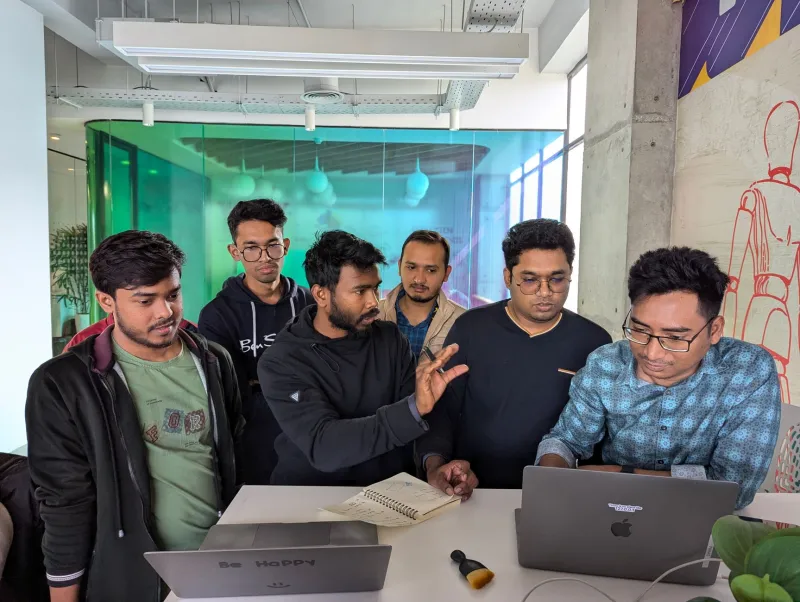
Let's back up. A few years ago, Chennai's developer community was grappling with a set of challenges that most Silicon Valley teams never had to think about. Bandwidth wasn't always reliable. Mobile-first wasn't a design philosophy — it was a survival requirement. And when you're building microservices that need to talk to each other across teams scattered between Chennai, Bengaluru, and a US client base operating nine-plus hours behind, you can't afford chatty APIs.
The conventional RESTful approach — multiple round trips, verbose payloads, tightly coupled service dependencies — started breaking down fast under these conditions. So GDG Chennai developers started experimenting. They had to.
What came out of those late-night hackathons, community workshops, and brutally honest code reviews was a set of API design philosophies that prioritized payload efficiency, resilience to partial failure, and what the community started calling "conversational minimalism" — the idea that every API call should carry exactly what it needs and nothing more, but also be smart enough to handle degraded responses gracefully.
Patterns That Traveled
A few specific innovations stand out when you talk to developers in the GDG Chennai community who were around during this period.
Adaptive response shaping became a go-to pattern. Rather than returning fixed data structures, APIs were designed to accept capability headers from the client — essentially letting the requester declare what it could handle. A low-bandwidth mobile client could signal for a stripped-down response. A high-throughput internal service could request the full payload. The server adapted. This sounds obvious in retrospect, but it was a departure from the "one schema to rule them all" mentality that dominated API design at the time.
Tiered fallback contracts were another community-developed approach. When a downstream microservice was degraded or slow, instead of failing loudly or waiting on a timeout, APIs were designed to return a pre-negotiated "graceful minimum" — enough data to keep the user experience functional without guaranteeing completeness. The pattern formalized what developers had been doing informally for years: designing for the bad day, not the good one.
Then there was the push toward event-carried state transfer, a pattern that reduced inter-service polling by encoding enough context into event payloads that consuming services didn't need to call back for more information. This cut API chatter dramatically — a huge win when every network hop costs you.
Why US Architects Are Paying Attention
Here's where it gets interesting. US cloud teams didn't adopt these patterns because they ran out of bandwidth. AWS isn't throttling anyone's internal service mesh. Google Cloud engineers aren't fighting spotty connections in their Mountain View offices.
They're adopting these patterns because distributed systems at scale — regardless of geography — share the same fundamental failure modes. Latency spikes. Partial outages. Cascading timeouts. The constraints that Chennai developers faced as a daily reality are the same constraints that US systems encounter at the tail end of their traffic curves, during peak load events, or when a dependency hiccups at 2 AM.
Building for constraint, it turns out, is just building for reality.
Several US platform engineering teams have started referencing community-published documentation and talks from GDG Chennai events when discussing resilience patterns. The GDG Chennai community's willingness to build in public — sharing not just what worked but what failed spectacularly — gave US architects a rare view into iterative, constraint-tested design thinking that internal corporate documentation rarely captures.
The Community That Made It Possible
None of this happened in a vacuum. The GDG Chennai community's structure — open workshops, peer code reviews, and a culture of frank technical debate — created the conditions for this kind of applied innovation. When developers from different companies, working on different stacks, come together and compare notes on what's actually breaking in production, you get a different kind of knowledge than what emerges from a single engineering org's internal retrospectives.
This is the part that doesn't always make it into the architecture blog posts and conference talks: the social infrastructure behind the technical innovation. GDG Chennai wasn't running a formal research program. It was running meetups. The patterns emerged because developers trusted each other enough to share their ugly problems and half-baked solutions.
That trust — built over years of community events, shared learning, and a genuine culture of lifting each other up — is what made the technical experimentation possible in the first place.
What This Means for the Broader Conversation
For US developers and architects watching this trend, there are a few takeaways worth sitting with.
First, the most durable architectural patterns tend to come from constraint, not comfort. If your team is only designing for your best-case infrastructure, you're probably leaving resilience on the table.
Second, developer communities outside the traditional US tech hubs are producing serious, production-tested technical innovation — not just executing on patterns handed down from Silicon Valley. The knowledge transfer is increasingly bidirectional, and US teams that treat it that way will have a structural advantage.
And third, the open, community-driven model that GDG Chennai embodies — where developers share real problems in real time without corporate gatekeeping — is genuinely producing different and better outcomes than closed internal R&D. That's not a knock on corporate engineering culture. It's an argument for investing in the communities that exist outside it.
Building Something That Lasts
The API patterns that came out of Chennai's developer community will keep evolving. The community will keep building, keep breaking things, and keep sharing what they learn. That's the whole point.
For US cloud architects retrofitting these patterns into infrastructure that was never built with Chennai's constraints in mind, the message is straightforward: you don't need to have faced the original problem to benefit from the solution. You just need to be paying attention to where the real innovation is happening.
And increasingly, it's happening in communities like this one.