When America Sleeps, Chennai Debugs: The Accidental Superpower Reshaping Distributed Engineering
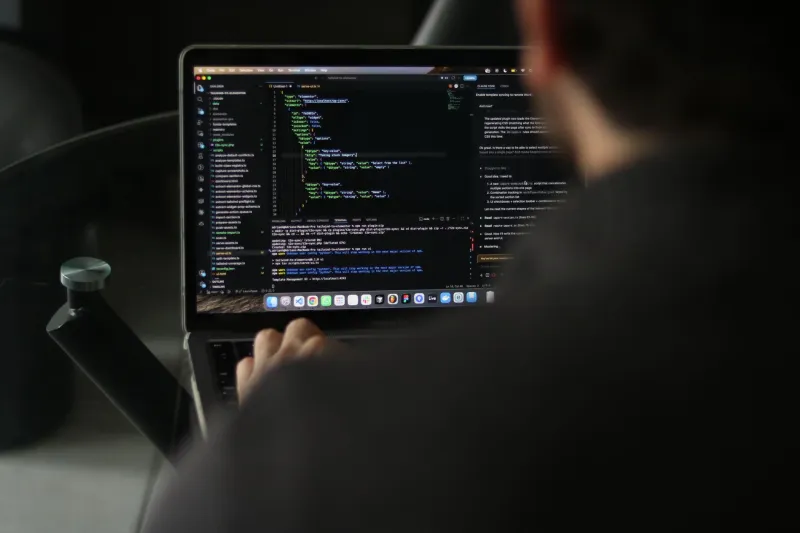
There's a moment every US engineering team dreads: the Slack message that lands at 2 a.m. Pacific time, all-caps, subject line something like "PROD IS DOWN." For most American developers, that message means a groggy, half-awake scramble to open a laptop, squint at dashboards, and hope the coffee kicks in before the CEO does.
In Chennai, that same moment hits at 12:30 in the afternoon — right after lunch, fully caffeinated, with a clear head and a community of fellow developers just a WhatsApp message away.
That's not a small thing. That's actually kind of a big deal.
The Math No One Was Doing
For years, the timezone gap between India and the US was framed purely as a logistical headache — something to be managed, scheduled around, apologized for in meeting invites. The narrative was always about the friction: the missed calls, the delayed standups, the async handoffs that occasionally went sideways.
But GDG Chennai members started noticing something different. When US-based engineering teams hit production fires during their off-hours, the Chennai folks weren't just available — they were sharp. No context switching. No post-lunch fog. No half-listening-while-checking-email energy. They were mid-day, fully present, and already embedded in the kind of focused problem-solving headspace that takes most people an hour of morning routine just to approximate.
Rohan Krishnamurthy, a backend engineer who's been active in GDG Chennai's monthly meetups for three years, put it plainly: "When a US team's production environment breaks at 2 a.m. their time, they're running on adrenaline and panic. We're running on clarity. That's a different kind of debugging."
The Cognitive Edge Nobody Talks About
Here's what the research actually suggests, even if it's rarely framed in a distributed-team context: cognitive performance during debugging tasks is heavily influenced by alertness state, working memory availability, and stress levels. Panic-driven problem-solving — the kind that happens when an on-call engineer is jolted awake by a PagerDuty alert — tends to narrow focus, increase tunnel vision, and reduce the likelihood of catching second-order effects in a system failure.
Chennai developers working mid-afternoon don't have that problem. They've eaten. They've warmed up. They've already been thinking in code for a few hours. And critically, they're often working alongside each other — in co-working spaces, in informal groups, in the kind of ambient collaborative environment that GDG Chennai has spent years cultivating through its workshops and networking events.
That last part matters more than people realize. Debugging is rarely a solo sport. The Chennai developer community has built a culture where reaching out to a peer mid-problem isn't a sign of weakness — it's just how good engineering gets done. That social infrastructure turns individual timezone availability into a collective problem-solving resource.
Real Outages, Real Mentorship
Some of the most compelling evidence for this dynamic doesn't come from academic papers — it comes from the war stories GDG Chennai members share over chai at post-meetup hangouts.
Priya Subramaniam, a DevOps engineer who now mentors junior developers through GDG Chennai's community programs, describes walking a US startup through a cascading database failure that had stumped their team for nearly four hours. "They had three engineers on the call, all of them exhausted, all of them focused on the same two or three things. I came in fresh, pulled up the logs, and within twenty minutes I saw a connection pool issue that wasn't even on their radar. It wasn't that I was smarter. I just wasn't tired."
That story isn't unique. Across GDG Chennai's community, similar accounts surface regularly — Chennai developers who've become trusted incident-response collaborators for US teams not because they were formally hired for the role, but because they were there, awake, and good at the moment it counted.
US engineering managers have started noticing. Some are now deliberately structuring their on-call rotations to include India-based team members specifically because of the alertness advantage during American off-hours. Others are building async-first runbooks that account for Chennai as a first-responder hub rather than a support function.
What This Means for How US Teams Should Think About Distributed Work
The broader lesson here isn't just about timezone math — it's about rethinking the entire framework around distributed collaboration. US tech culture has long defaulted to synchronous-first models: real-time meetings, live standups, instant Slack responses expected within minutes. That model was built around a single timezone and a single office, and it's showing its age.
What Chennai's developer community has modeled — partly by necessity, partly by cultural inclination — is something more durable: a system where asynchronous communication is treated as a feature rather than a workaround, where documentation is a first-class artifact rather than an afterthought, and where geographic spread is leveraged rather than lamented.
GDG Chennai's events have increasingly become a venue where these ideas get pressure-tested and refined. Tech talks on incident response, workshops on async communication tooling, networking sessions where Chennai engineers swap notes with US counterparts over video — all of it adds up to a community that's actively building the playbook for what distributed engineering should look like.
The Flip That's Already Happening
Here's the thing: this shift is already underway, whether US teams are consciously aware of it or not. The companies that are figuring it out fastest aren't the ones treating their Chennai developers as a cost-saving measure — they're the ones treating them as a strategic timezone asset, investing in the community infrastructure that makes that asset reliable.
That means supporting participation in groups like GDG Chennai. It means giving engineers the time and space to attend meetups, contribute to workshops, and stay connected to a peer network that sharpens their skills and keeps them embedded in the broader developer ecosystem. It means understanding that the informal knowledge-sharing happening over samosas after a GDG Chennai event is part of what makes that mid-afternoon incident response call so effective.
The timezone gap was never really the problem. The problem was assuming it had to be a gap at all.
Chennai's developer community figured that out a while ago. The rest of the industry is catching up.