The Inclusion Gap: What Silicon Valley's Diversity Programs Can Learn from a Chennai Developer Meetup

Photo by Photo by SUSHMITA NAG on Unsplash on Unsplash
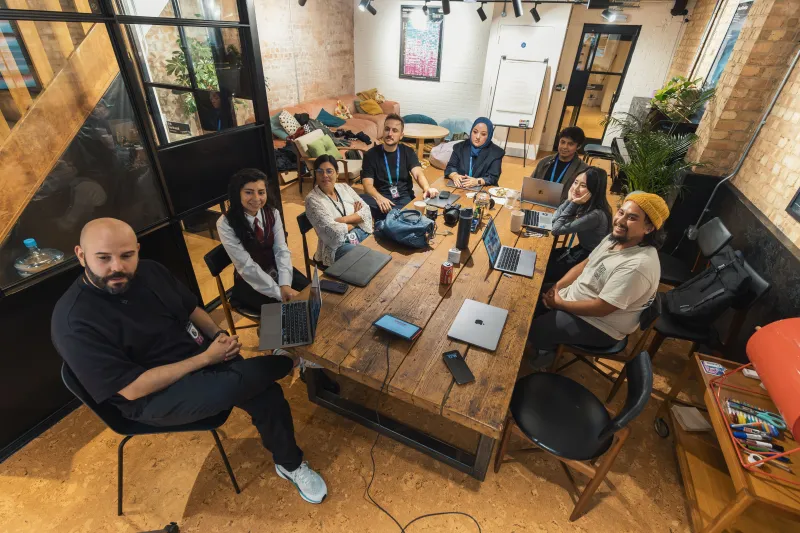
Let's start with a number that tends to stop people mid-conversation: at several recent GDG Chennai events, female attendance has hovered between 40 and 45 percent. For context, the US tech industry's average hovers somewhere around 26 to 28 percent for women in technical roles — and that's after years of high-profile, high-budget diversity initiatives from some of the most well-resourced companies on the planet.
So what's going on in Chennai? And why aren't more US tech leaders paying attention?
The answer, it turns out, isn't a secret formula or a revolutionary new program. It's a collection of practical, community-driven decisions that accumulated over time — and it starts with who's in the room when the decisions get made.
Numbers First, Then the Story Behind Them
Before we dig in, it's worth being precise about what we're comparing. GDG Chennai's participation metrics aren't measuring women in corporate engineering roles — they're measuring active participation in a developer community: attending workshops, speaking at events, mentoring others, contributing to community projects. That's a different metric than payroll data.
But here's why it matters: community participation is a leading indicator. The developers who show up to GDG workshops, who present at meetups, who mentor the next cohort — those are the developers who get recruited, who get promoted, who become the tech leads and CTOs of the next decade. If you want to understand where the talent pipeline is heading, look at who's active in developer communities right now.
And in Chennai, a striking number of those active community members are women.
"I've been to tech meetups in the US," says Divya Krishnamurthy, a GDG Chennai community organizer who spent two years working in Seattle before returning to India. "The vibe is different. Here, I don't spend the first 20 minutes figuring out whether I belong. I just belong."
Workshop Design That Doesn't Default to Bro Culture
One of the first things female developers point to when asked about GDG Chennai's environment is the structure of its workshops. They're hands-on, pair-programming-heavy, and deliberately designed to avoid the competitive, show-off dynamic that can make tech spaces feel exclusionary.
"In a lot of tech workshops, there's an implicit ranking happening," explains Lakshmi Anand, a frontend developer who has attended more than a dozen GDG Chennai sessions. "Who knows the most, who finishes first, who asks the 'smartest' question. That culture benefits people who already have confidence — which, statistically, skews male in tech spaces. GDG workshops here are different. The goal is learning together, not proving yourself."
This isn't accidental. Community organizers have made deliberate choices about facilitation style, group composition during exercises, and how speakers frame their talks. The emphasis is on practical skill-building over credential-signaling, which lowers the barrier for anyone who hasn't had the luxury of years of confidence-building in the field.
Mentorship That Looks Like Mentorship
Ask most US tech companies about their mentorship programs and you'll get a polished answer involving formal matching systems, quarterly check-ins, and structured goal-setting. Ask female developers at GDG Chennai about mentorship and you'll get something messier and more honest.
"It's not a program, exactly," says Nithya Subramaniam, a data engineer who now leads a study group for women exploring machine learning. "It's more like... there are people who will answer your WhatsApp message at 11 p.m. when you're stuck on something. People who will review your portfolio before you send it to a recruiter. People who show up."
That informal density of support — what researchers sometimes call "weak tie" networks — turns out to be enormously powerful for retention and advancement. And it's something that formal corporate mentorship programs, with their quarterly cadences and HR oversight, often fail to replicate.
The GDG Chennai community has cultivated this kind of network organically, partly because the community itself is small enough that relationships form naturally, and partly because its leadership has consistently modeled the behavior of showing up for others.
The Role of Visible Leadership
Representation at the leadership level matters — not as a feel-good metric, but as a practical signal to everyone else about who the community is for. GDG Chennai has made consistent efforts to ensure that women aren't just attendees but speakers, workshop leads, and organizers.
That visibility has a compounding effect. When a junior developer sees someone who looks like her presenting a technical deep-dive on Google Cloud architecture, she doesn't have to do the extra cognitive work of imagining herself in that role. The path is already visible.
"I gave my first tech talk at GDG Chennai," says Preethi Mohan, who now works as a senior engineer at a US-based SaaS company and mentors junior developers in the community. "I was terrified. But the environment made it feel safe to try. And once you've done it once, the fear shrinks. Now I present at conferences. It started here."
What US Tech Companies Can Actually Do With This
It would be easy to look at GDG Chennai's numbers and conclude that cultural context explains everything — that what works in Chennai can't be transplanted to Mountain View or New York. That's a convenient conclusion, but it's also a lazy one.
The specific mechanisms that are working here — hands-on workshop formats, informal mentorship networks, visible female leadership, a culture that prioritizes learning over performance — none of these are geographically exclusive. They're design choices. And they're choices that US tech companies and developer communities can make too.
What's harder to replicate is the intentionality. GDG Chennai didn't stumble into its diversity numbers. Community members made deliberate decisions about how to run events, who to invite to speak, and what kind of culture to protect as the community grew. That intentionality has to come first — before the metrics, before the press releases, before the diversity reports.
Silicon Valley has the resources. What it sometimes lacks is the willingness to look outside its own ecosystem for answers that are already working somewhere else. Chennai, as it turns out, is a pretty good place to look.