Pushing the Commit: How Indian Developer Communities Became Architects of Open Source Infrastructure
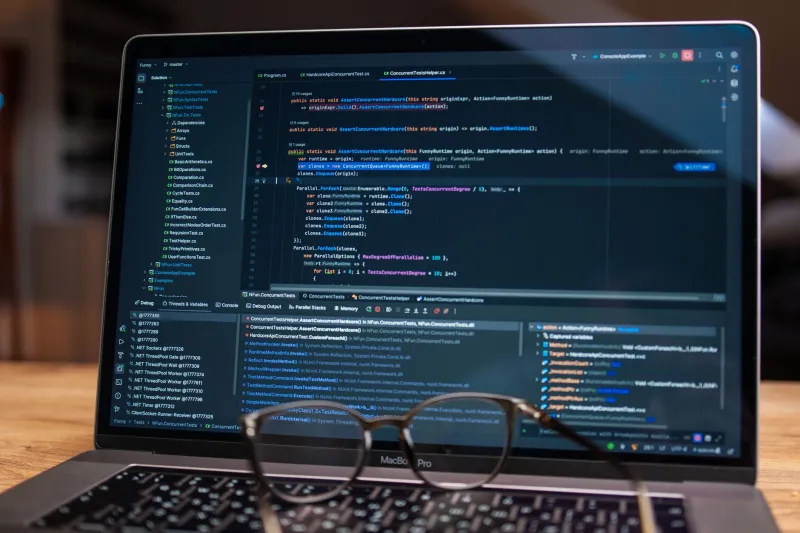
Open source runs American tech. That's not hyperbole — it's infrastructure reality. The frameworks, libraries, and tools that power everything from your bank's mobile app to the AI models reshaping entire industries are built on open-source foundations. And a growing share of the people building, maintaining, and improving those foundations are based in India, many of them connected through developer communities like GDG Chennai.
This isn't a soft cultural story. The numbers are real, the commits are public, and the impact is measurable.
By the Numbers: India's Open Source Footprint
GitHub's annual Octoverse report has flagged India as one of the fastest-growing developer nations on the platform for several consecutive years, with contribution rates climbing sharply across major open-source repositories. But raw user counts only tell part of the story. What's more telling is the depth of engagement — the shift from casual users filing issues to active contributors submitting pull requests, and from contributors to maintainers holding the keys to projects that millions of developers depend on.
In the Google technology ecosystem specifically — which includes projects like TensorFlow, Flutter, Dart, Kubernetes, and a sprawling array of Firebase and Google Cloud tools — Indian developers have moved from enthusiastic adopters to essential stewards. Community-organized events, including workshops and hackathons run through GDG chapters, have played a direct role in accelerating that shift by creating structured environments where developers can go from "I use this" to "I understand this well enough to improve it."
From Workshop Attendee to Core Maintainer
Consider the trajectory of Deepa Krishnamurthy, a developer from Chennai who first encountered Flutter at a GDG workshop in 2019. She started with the basics — a personal project, a few Stack Overflow answers, a talk at a local meetup. By 2022, she had merged contributions into Flutter's core repository and was actively reviewing pull requests from developers across three continents.
"The community gave me the confidence to think of myself as someone who could contribute, not just consume," Deepa says. "When you see someone three seats away from you at a meetup submit their first PR and get it merged, you stop thinking of open source as something that other people do."
This psychological shift — from observer to participant to leader — is something GDG Chennai has been deliberately cultivating. Regular contribution sprints, paired programming sessions focused on open-source projects, and dedicated mentorship tracks for first-time contributors have created a structured on-ramp that removes a lot of the friction that keeps talented developers from engaging with upstream projects.
Why This Matters to US Tech Teams
For American developers and engineering leaders, this trend has practical implications that go beyond feel-good global collaboration narratives.
When a developer in Chennai becomes a maintainer on a project your team relies on, they're not just a name in a changelog. They're a decision-maker. They determine what gets merged and what doesn't. They set the direction for how the tool evolves. They write the documentation your team will use. The architecture of the software your company ships is increasingly shaped by people whose career paths ran through community halls and weekend hackathons in India.
That's a significant shift in where technical authority lives — and it's one that a lot of US engineering leaders haven't fully internalized yet.
Sanjay Mehta, a developer advocate who splits time between San Francisco and Chennai, frames it this way: "American companies are used to thinking of themselves as the producers and everyone else as the consumers. That model is outdated. The projects that US companies depend on are being co-built by a globally distributed group of contributors, and India is a major node in that network."
The Community Infrastructure Behind the Contributions
None of this happens in a vacuum. The open-source momentum coming out of communities like GDG Chennai is the product of deliberate, sustained community infrastructure — the kind that doesn't show up in a press release but shows up in pull request histories.
Regular hackathons focused on specific Google open-source projects give developers a goal-oriented environment to make their first contributions. Study groups organized around reading open-source codebases build the kind of deep familiarity that turns users into contributors. And perhaps most importantly, the culture within GDG Chennai actively celebrates contribution milestones — a first merged PR gets the same kind of community recognition as a job promotion.
"We track who's contributing and to what, and we make it visible," says community organizer Karthik Subramanian. "When someone gets their first commit merged into a major project, we shout about it. That creates a social incentive that compounds over time."
That compounding effect is visible in the data. GDG Chennai members have accumulated contributions across projects including TensorFlow Lite, the Flutter engine, Dart's core libraries, and multiple Google Cloud client libraries. Several members have gone on to serve as Google Developer Experts — a recognition program that identifies leading practitioners in Google technologies globally.
Shifting the Narrative from Consumer to Architect
There's a narrative about Indian tech talent that's been slow to update: that it's primarily execution-oriented, strong on implementation but less present at the level of design, architecture, and thought leadership. Open-source contribution data challenges that story directly.
Maintaining a widely-used open-source project requires exactly the kind of judgment, communication, and systems thinking that defines technical leadership. You're not just writing code — you're making decisions about API design, deprecation timelines, backward compatibility, and community governance. These are architectural choices with long-term consequences, and Indian developers are increasingly making them for tools that US companies use every single day.
For the broader tech industry, the takeaway is straightforward: the global open-source ecosystem is genuinely global now, and the communities powering it — including the one building and connecting in Chennai — aren't on the periphery of that story. They're writing significant chapters of it.
If you're a US developer who's never thought about where your dependencies come from or who's maintaining them, it might be time to take a look at the commit history. You might find some familiar faces from a Saturday night workshop halfway around the world.