American Engineers Are Logging Into Chennai Meetups at Midnight — Here's What That Tells Us About the Future of Tech

The Midnight Login
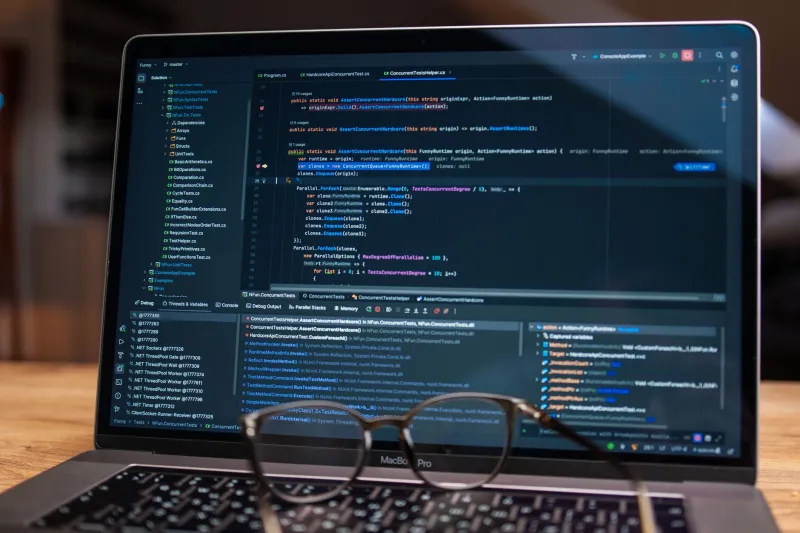
Picture a software engineer in Austin, Texas, setting a 11:45 PM alarm — not for a flight, not for an on-call incident, but for a Google Developer Group Chennai talk on advanced Flutter state management that they found recommended in a Discord server.
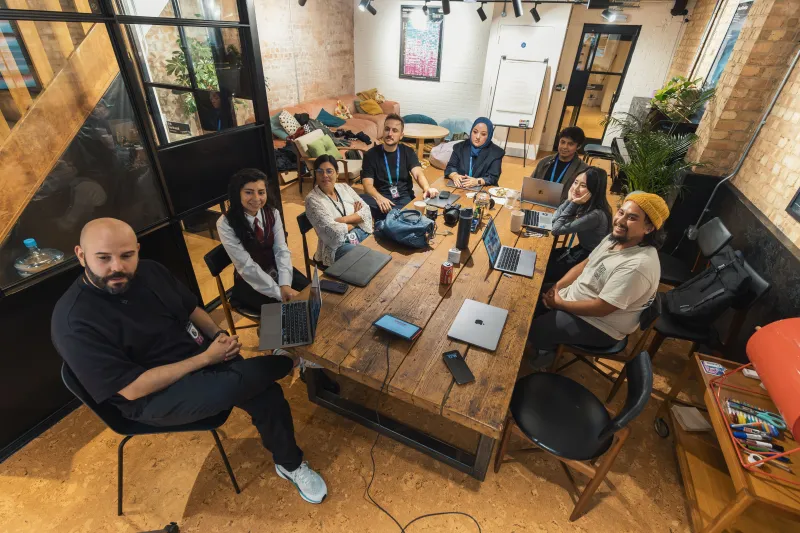
This is happening. Not in massive, headline-grabbing numbers yet, but with enough frequency that it's worth paying attention to. American developers are tuning into Indian tech community events, participating in cross-continental hackathons, and actively seeking out conversations that are originating in Chennai, Bangalore, Hyderabad, and beyond.
For anyone who grew up with a certain mental model of how global tech talent flows — always westward, always toward the Valley — this is a genuinely surprising development. And it says something important about where influence in the global tech ecosystem is actually shifting.
How the Internet Flipped the Migration Script
For most of the last three decades, the dominant narrative of tech talent was linear. Engineers from India — often extraordinarily well-trained, deeply motivated, and underserved by local opportunity structures — made their way to the United States, built careers at major tech companies, and became foundational to the American tech industry's success. That story is real and well-documented.
But the internet, and specifically the explosion of high-quality technical content coming out of developer communities like GDG Chennai, has introduced a second narrative that runs in the opposite direction.
When a GDG Chennai talk on Google Cloud architecture is streamed live and archived on YouTube, it doesn't have a geographic audience cap. When an Indian developer community runs a hackathon with a globally distributed participant base, the best engineers show up regardless of their passport. When a Chennai-based developer posts a genuinely useful technical deep-dive on a community forum, US engineers bookmark it, share it, and start following the source.
The content is good. The communities are active. And the barriers to participation are basically zero.
What's Drawing American Developers In
There's a practical explanation and a cultural one, and both matter.
On the practical side, GDG Chennai and communities like it are producing technical content that's genuinely excellent. Talks on emerging Google technologies, hands-on workshops covering real implementation challenges, and collaborative projects that produce actual output rather than just networking — these are things American developers want access to, and they're not always finding them at home with the same density or quality.
US developer communities, particularly in major metro areas, have become expensive to participate in, increasingly corporate in their sponsorship and agenda-setting, and in some cases, less technically rigorous than they were a decade ago. A Chennai GDG session that runs two hours of dense, practitioner-level content with no sales pitch attached is a refreshing alternative.
The cultural draw is subtler but arguably more interesting. There's a kind of intellectual energy in communities that are still in growth mode — where participants are hungry, where the problems being solved are genuinely novel, and where the collaborative spirit hasn't yet been professionalized into something transactional. American developers who've spent years in mature, slightly calcified tech communities are finding that energy attractive.
What This Means for Remote Work Culture
The rise of distributed work has done something profound to the geography of professional development. When your job is fully remote, the communities you belong to don't have to be local. Your professional identity can be shaped by a Slack channel in Singapore, a Discord server run out of Berlin, or a developer group based in Chennai.
This is reshaping how American engineers think about their own growth. The smartest ones are no longer limiting their learning networks to their immediate geography or even their employer's internal resources. They're going where the best conversations are happening — and increasingly, some of those conversations are happening in Indian developer communities.
For US tech companies, this has real implications. If your engineers are building meaningful professional relationships and finding their most valuable learning experiences through global community participation, your ability to retain those engineers by offering purely local community perks starts to erode. The community benefit package — internal tech talks, on-campus hackathons, curated learning programs — loses its differentiation when the external alternative is genuinely better.
The Influence Question Nobody Is Asking Out Loud
Here's the uncomfortable version of this story: tech influence follows community gravity.
For decades, Silicon Valley had overwhelming community gravity. The best engineers were there, the most important conversations were there, the career-defining relationships were formed there. That gravity attracted talent, capital, and cultural authority in a self-reinforcing loop.
Communities like GDG Chennai are building their own gravitational fields. Slowly, then suddenly. When American engineers start orienting their professional development toward Indian developer communities — even partially, even just for specific technical domains — they're acknowledging that the center of gravity is shifting.
US companies that ignore this are taking a real strategic risk. Not because GDG Chennai is going to replace Silicon Valley — that's not the right frame. But because the engineers who are actively participating in globally distributed communities are going to develop professional networks, technical perspectives, and collaborative instincts that their more locally-focused peers won't have. And those engineers are going to be better at building products for a global user base, better at working across distributed teams, and better at spotting technical trends before they become obvious.
The Opportunity in the Asymmetry
None of this has to be a zero-sum story. The most optimistic version of the reverse brain drain isn't about influence shifting from one place to another — it's about the emergence of genuinely global technical communities where the best ideas win regardless of their origin point.
GDG Chennai has always been oriented toward connection and growth. The fact that the community's reach now extends to developers logging in from Austin, Seattle, and New York at midnight isn't a threat to anyone. It's evidence that the model works.
For US-based developers and tech leaders, the practical takeaway is straightforward: if you haven't explored what's happening in Indian developer communities, you're missing some of the most energetic, technically rigorous, and genuinely collaborative spaces in the global tech ecosystem right now.
Set the alarm. Log in. The conversation is worth losing a little sleep over.